A single fault should not have to black out an entire property. Yet that is often what happens in older consumer units where several circuits share one RCD. The benefits of RCBO protection are most obvious at that awkward moment: one faulty appliance or damaged cable trips, while lighting, refrigeration, security equipment and other healthy circuits can remain in service.
For homeowners, landlords and business owners across Blackpool and the Fylde Coast, an RCBO upgrade can provide a more practical level of electrical protection. It is not simply about avoiding inconvenience. It can make faults easier to identify, reduce disruption and help bring an installation in line with the safety expectations of modern electrical work.
What is an RCBO?
RCBO stands for Residual Current Circuit Breaker with Overcurrent protection. It combines two protective functions in one device, usually fitted in a consumer unit or distribution board.
First, it protects against overcurrent. This covers overloads, such as too many appliances drawing power on a circuit, and short circuits caused by a fault between conductors. Second, it provides residual current protection, often referred to as RCD protection. This detects an imbalance in the electrical current that may indicate electricity is leaking to earth, possibly through damaged insulation, faulty equipment or a person receiving an electric shock.
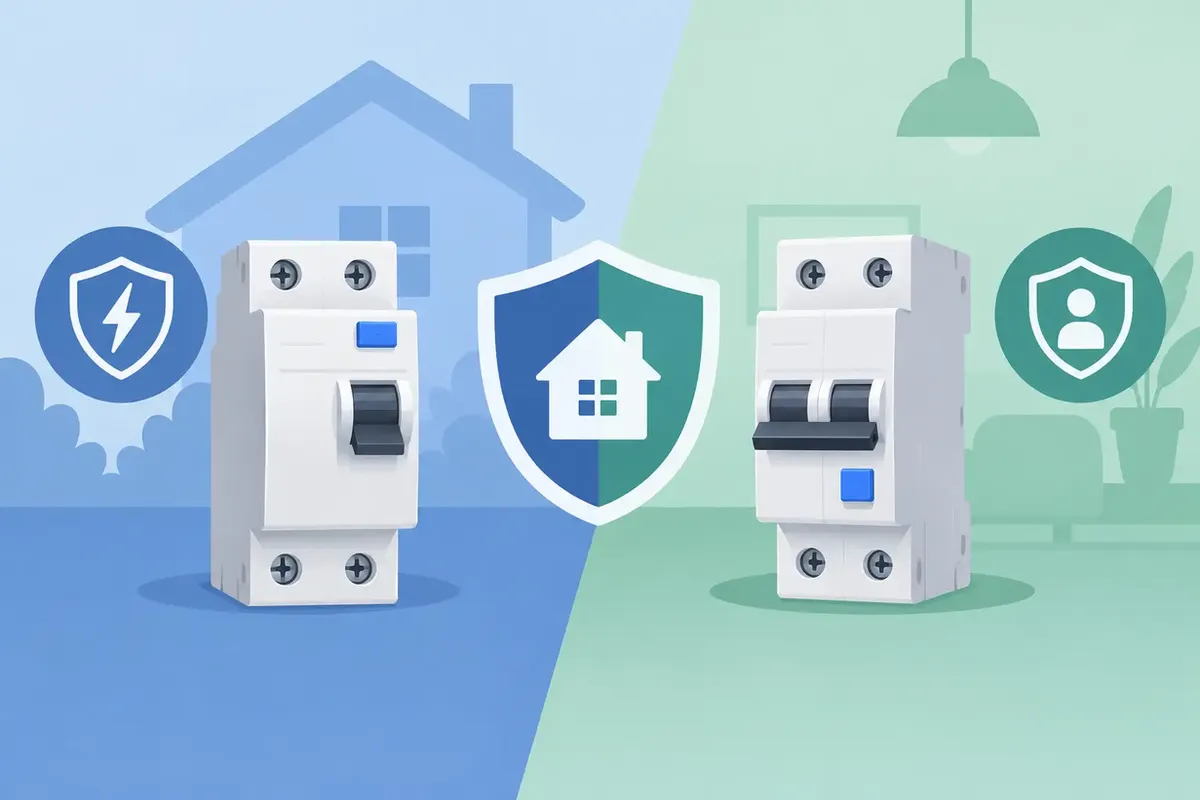
A traditional arrangement may use individual MCBs for circuit overcurrent protection alongside one or more shared RCDs. An RCBO gives each individual circuit its own overcurrent and residual current protection. That distinction is where much of its value lies.
The main benefits of RCBO protection
A fault is contained to one circuit
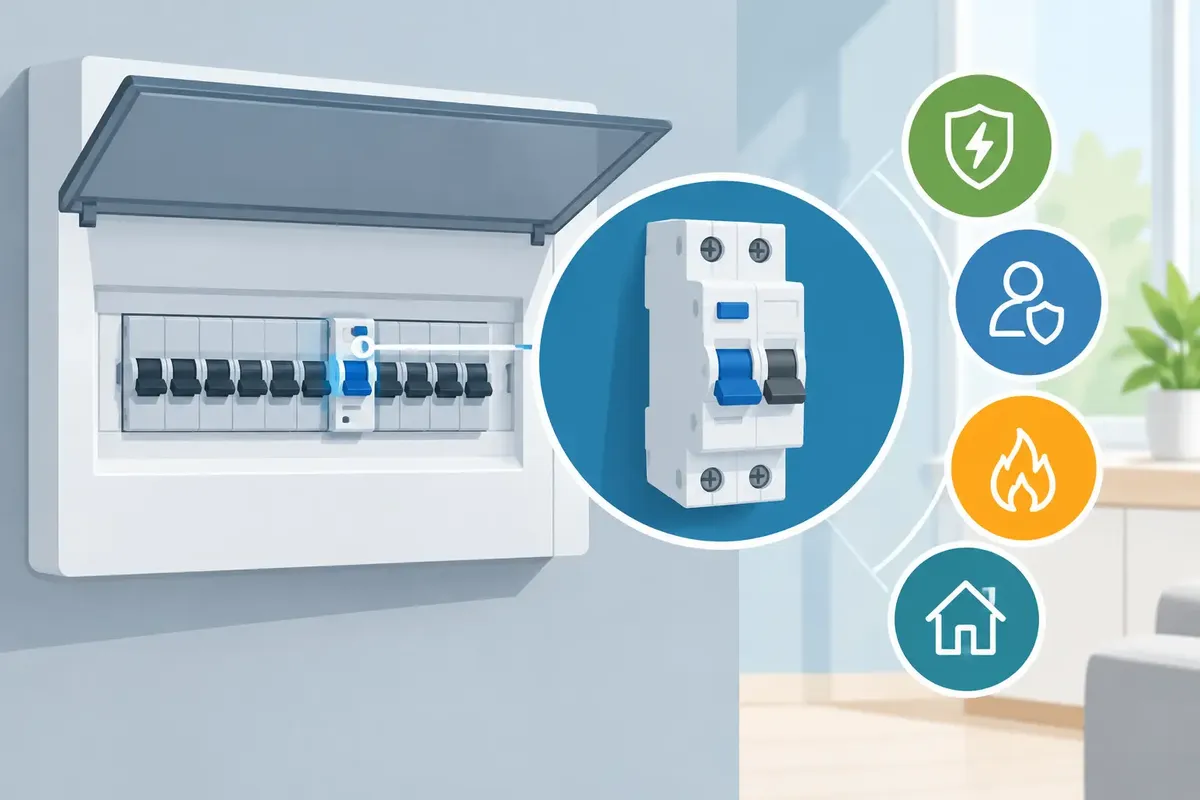
Selective tripping is the principal benefit. If a fault develops on the upstairs socket circuit, a correctly selected RCBO should disconnect that circuit without unnecessarily switching off the ground-floor lights, boiler controls or kitchen appliances.
This matters in ordinary homes, but it can be even more valuable in rented properties and workplaces. A shared RCD nuisance trip may leave tenants without lighting or cause a shop to lose refrigeration, tills or network equipment while somebody tries to find the cause. RCBOs cannot stop a genuine fault from occurring, but they help limit its effect.
Easier fault finding and faster repairs
When several circuits are protected by one RCD, identifying the source of a trip can involve isolating circuits one by one. A consumer unit fitted with RCBOs gives a clearer starting point because the affected circuit is immediately visible.
That does not mean the device itself is necessarily faulty. An RCBO may trip because of a damaged extension lead, moisture in an outside fitting, a failing appliance or an issue within the fixed wiring. However, knowing which circuit has operated helps an electrician investigate efficiently and reduces the temptation to repeatedly reset a device without understanding why it tripped.
Reduced nuisance loss of power
Electrical installations naturally have small amounts of leakage current, particularly where there are electronic appliances, LED drivers, EV equipment, IT equipment or appliances with filters. On a shared RCD, the combined leakage from several otherwise healthy circuits can sometimes lead to unwanted tripping.
Splitting circuits across individual RCBOs can reduce this problem because each device monitors a single circuit rather than the combined leakage of numerous circuits. It is particularly useful in properties with more electrical equipment than the original installation was designed to serve. Correct circuit design still matters, though. An RCBO is not a cure for defective appliances, poor connections or overloaded circuits.
Better continuity for essential equipment
Some circuits are more inconvenient to lose than others. In a home, that might be a freezer, heating controls, a smoke alarm supply or security system. In commercial and industrial premises, it may include emergency lighting charging circuits, alarm systems, communications equipment or equipment that needs an orderly shutdown.
Using RCBOs can allow these circuits to remain operational when an unrelated circuit develops a fault. Where continuity is especially important, an electrician should assess the wider installation rather than treating RCBOs as the only measure. Battery backup, proper circuit segregation, fire safety requirements and maintenance arrangements may all be relevant.
A useful option during consumer unit upgrades
Modern consumer unit work is an opportunity to review the condition and layout of an installation. If a property has ageing protective devices, frequent unexplained trips, limited RCD coverage or an awkward split-load board, RCBO protection may be the right approach.
It can also make future additions easier to manage. An extension, new kitchen, electric shower, garden supply or EV charging point can change the demands placed on an installation. A well-planned board with individual circuit protection provides a clearer, more maintainable arrangement than adding layers of protection without reviewing the whole system.
RCBOs and electrical safety requirements
The requirements of BS 7671 depend on the type of circuit, how it is used and the design of the installation. In many domestic and similar settings, 30 mA RCD additional protection is required for circuits such as socket outlets and may be required for other circuits too. An RCBO is one recognised way of providing that protection on an individual circuit.
For landlords, the Electrical Safety Standards Regulations require the electrical installation in rented homes to be inspected and tested at the required intervals, with issues addressed appropriately. An Electrical Installation Condition Report may identify the absence of suitable RCD protection, but the right remedial work will depend on the observations, the age of the installation and the current regulations that apply to the work being undertaken.
For businesses and industrial operators, the focus should be on safe design, inspection, testing and maintenance. RCBOs can support a safer and more resilient installation, but they do not remove the need for routine checks, competent repair work and suitable emergency arrangements.
What RCBO protection does not do
It is sensible to be clear about the limits. An RCBO does not repair deteriorating cables, eliminate the risk of loose connections or prevent every electrical fire. It does not replace correct earthing and bonding, smoke alarms, surge protection devices or arc fault detection devices where these are appropriate.
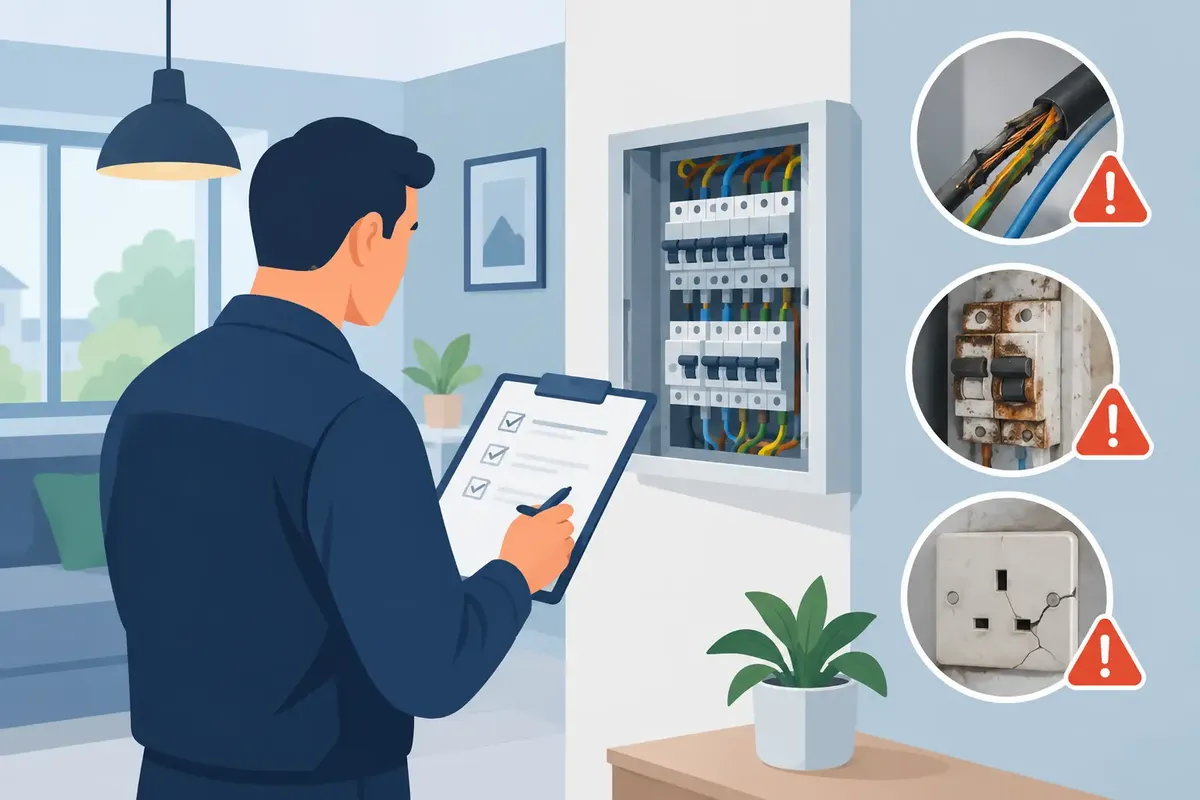
Nor should an RCBO that trips be ignored. A trip is a protective response. Resetting it once may be reasonable after unplugging suspect portable equipment, but repeated operation needs investigation. If there is burning smell, discolouration, buzzing, heat at the consumer unit, signs of water ingress or an electric shock, leave the circuit off and arrange urgent professional assistance.
Is an RCBO upgrade right for every property?
Not always. The condition, make and capacity of the existing consumer unit must be assessed first. Some older boards are unsuitable for modification, replacement RCBOs may not be available or compatible, and the installation may reveal wider defects that should be addressed at the same time.
Cost is another consideration. Individual RCBOs can cost more than a basic shared-RCD arrangement, particularly where a board has many circuits. The additional cost is often justified by improved fault isolation and reduced disruption, but the decision should be based on the property’s use, the circuits present and the condition of the installation - not on a one-size-fits-all recommendation.
Consumer unit alterations should be carried out by a competent electrician who can test the installation, select compatible equipment and provide the appropriate certification. In England, certain work may also be notifiable under Building Regulations. Simply changing devices without testing can leave hidden faults unresolved and may compromise safety.
When to ask an electrician for advice
Frequent RCD tripping, a dated fuse board , a planned rewire or the installation of high-demand equipment are all good reasons to have the consumer unit assessed. The same applies if an EICR has highlighted concerns over RCD protection or if a landlord is planning remedial work between tenancies.
Blackpool & Fylde Electrical Services Limited can assess whether RCBOs are suitable as part of a consumer unit upgrade, fault-finding visit or wider electrical safety work. The practical aim is straightforward: protect people and property properly, while avoiding unnecessary loss of power when one circuit develops a fault.
A consumer unit should quietly do its job for years. Choosing protection that isolates problems clearly gives you a safer starting point when something does go wrong.